
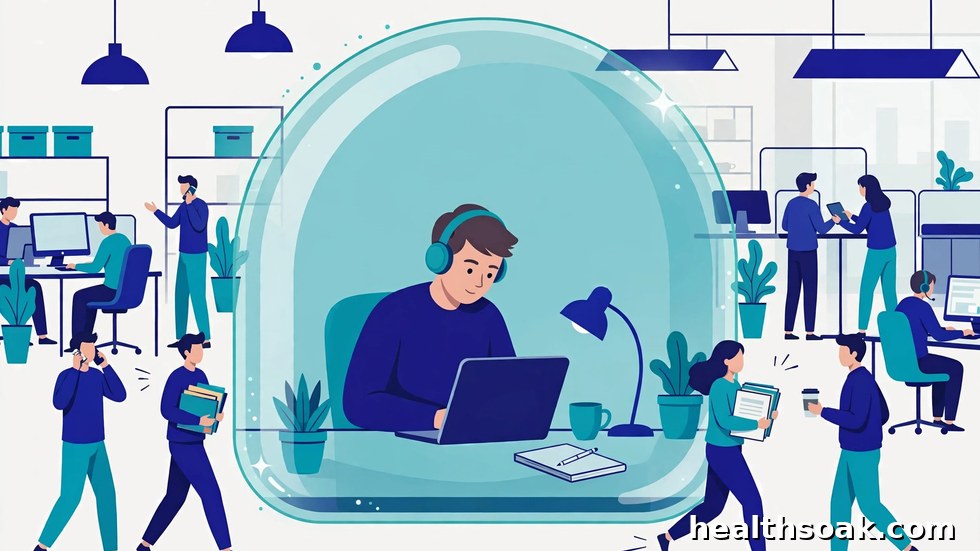
The open office was supposed to spark collaboration, but for most workers it mostly sparks interruptions. A tap on the shoulder, a quick question from the next desk, the hum of a dozen conversations — each one shatters focus, and research consistently shows it takes over twenty minutes to fully regain deep concentration after an interruption. You cannot redesign the office, but you can redesign how interruptions reach you.
Understand the True Cost of Interruptions
Not all interruptions are equal. A colleague asking where a file lives costs you two minutes of their time and twenty of yours. Multiply that by a handful of drive-by questions per day and you lose hours of productive work weekly. The first step is making the cost visible — to yourself and, diplomatically, to your team. Once everyone sees the pattern, the solutions below become much easier to adopt.
Create a Personal Signal System
People interrupt because they cannot tell whether you are approachable right now. Fix that with a clear, kind signal system that the whole team understands.
Headphones as a Do-Not-Disturb Sign
The most universal signal in open offices is headphones on. Agree with your team that headphones mean “message me instead of tapping my shoulder” — even if you are listening to nothing. Some teams add a small desk flag or a colored card: green means available, red means in deep work until a posted time. The specific signal matters less than the shared agreement behind it.
Publish Your Focus Hours
Block two to three hours on the shared calendar every day as focus time, and name it clearly — “Focus block: available after 11.” When colleagues can see when you will be free, most will simply wait instead of interrupting. Consistency is key: if you honor the schedule, others will too.
Channel Interruptions into Office Hours
You cannot eliminate questions, but you can reschedule them. Hold a daily “office hour” — say 3:00 to 3:30 — when anyone can bring you anything. When someone interrupts outside that window, smile and say, “Can this wait until my office hour at 3? I’ll give it my full attention then.” Most things can wait, and people quickly learn to batch their questions instead of dripping them across your day.
This works upward too. If your manager is the interrupter, propose a short daily check-in at a fixed time. Managers often interrupt because they lack visibility; a predictable update removes the anxiety that drives the drive-bys.
Tame Your Own Digital Distractions
In an open office, half your interruptions are self-inflicted: the Slack ping, the email badge, the reflexive phone check. These are entirely within your control.
- Batch your messages. Check Slack and email at set intervals — every 60 to 90 minutes — instead of living in the inbox. Set your status to explain the rhythm.
- Silence non-urgent notifications. Keep alerts only for direct mentions and true emergencies. Everything else can wait for your next batch.
- Use one screen for work, none for noise. Close the news tab, mute the group chat during focus blocks, and keep your phone face-down or in a drawer.
- Negotiate response-time norms. Agree with your team that “within a few hours” is the default for non-urgent messages — instant replies train everyone to expect them.
When You Are Interrupted Anyway: The Triage Script
Some interruptions are legitimate. The skill is triaging fast instead of letting every one of them hijack your attention. Use this five-step process:
- Pause and listen for thirty seconds — do not try to hold your previous thought; it will evaporate.
- Ask one clarifying question: “What do you need from me, and when do you need it?”
- If it takes under two minutes, handle it now and move on.
- If it is bigger, schedule it: “I’ll look at this at 2 PM and update you by 3.”
- Jot a one-line note about where you left off, so resuming takes seconds instead of minutes.
Escape When the Office Wins
Some days the office simply will not cooperate — fire drills, loud neighbors, back-to-back noise. Keep a pre-approved escape plan: a quiet meeting room you can book, a library nearby, or negotiated work-from-home mornings for deep tasks. One focused hour in a quiet room beats three fractured hours at a noisy desk. Ask your manager to frame it as a productivity measure, because that is exactly what it is.
Key Takeaways
- Each interruption costs far more than its face value — protecting focus is protecting hours, not minutes.
- Agree on visible signals (headphones, desk flags, calendar blocks) so colleagues know when you are approachable.
- Hold daily office hours and batch your messages to reschedule interruptions instead of absorbing them.
- When interrupted, triage in under a minute: handle it, schedule it, or defer it — then note where you left off.
You do not need permission to protect your attention — you need a system. Start with one signal and one office hour this week, and watch how quickly your colleagues adapt. An open office does not have to mean an open schedule.